
Acupuncture Protocols for Treating the Hip
Acupuncture Protocols for Treating the Hip
This course includes
The instructors
Overview
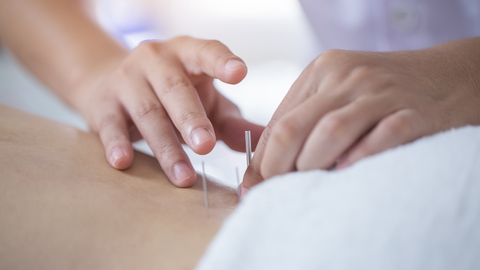
Acupuncture Protocols for Treating the Hip is an on-demand continuing education course presented by the Canadian Physiotherapy Association – Acupuncture and Dry Needling Division. This clinically focused course provides physiotherapists with detailed, anatomy-driven acupuncture protocols for assessing and treating hip-related pain and dysfunction.
Led by internationally recognized educator Whitfield Reaves, the course applies a sports acupuncture framework to common hip presentations, including muscular dysfunction, tendinopathy, bursitis, joint pathology, and sacroiliac involvement. Emphasis is placed on palpation-based assessment, anatomically significant points, and safe, effective needling strategies that can be immediately integrated into physiotherapy practice.
Learning Objectives
By the end of this course, participants will be able to:
-
Identify key anatomical structures involved in hip pain, including muscles, tendons, bursae, joints, and neural contributors.
-
Apply targeted acupuncture protocols for common hip conditions such as gluteal tendinopathy, trochanteric bursitis, hip osteoarthritis, and sacroiliac joint dysfunction.
-
Utilize the “Triad” approach to hip and low back treatment, incorporating the gluteus medius/minimus, quadratus lumborum, and sacroiliac joint.
-
Select and safely needle anatomically significant points, including motor points, trigger points, fascial zones, and joint-related regions.
-
Integrate acupuncture into a broader physiotherapy framework, supporting movement, stability, and functional recovery.
Audience
This course is designed for:
-
Physiotherapists trained in acupuncture and/or dry needling.
-
Clinicians treating hip, pelvic, and lower-extremity pain in orthopaedic or sports settings.
-
Physiotherapists seeking advanced, anatomy-based treatment strategies.
-
Practitioners interested in sports acupuncture and palpation-driven assessment.
-
Clinicians completing continuing professional development within regulated acupuncture practice.
About the Presenter

Whitfield is a nationally certified acupuncturist, and has been in clinical practice since 1981. He received his Doctor of Oriental Medicine (OMD) degree in 1983. His thesis, titled "Acupuncture and the treatment of common running injuries", was one of the first-ever English language works integrating traditional Chinese acupuncture with western orthopedic and sports medicine.
Whitfield's clinical experience includes medical care for athletes at the 1984 Olympic Games in Los Angeles, as well as track and field, skiing, cycling, and triathlon events nationally over the last 40 years. Whitfield has earned a distinguished role in the development of orthopedic and sports medicine in the acupuncture profession in North America and Europe.
Why This Course Matters
Hip pain is a frequent and often complex presentation in physiotherapy, involving overlapping muscular, tendinous, joint, and biomechanical contributors. Effective treatment requires more than point prescription — it demands precise palpation, anatomical understanding, and clinical reasoning.
This course matters because it:
-
Bridges anatomy and clinical application, moving beyond theory to practical protocols.
-
Provides structured treatment strategies for challenging hip conditions.
-
Emphasizes palpation and tissue-specific needling, improving treatment precision.
-
Supports clinical decision-making when addressing chronic, recurrent, or sport-related hip pain.
-
Enhances physiotherapists’ confidence in using acupuncture as part of an integrated care approach.
The instructors

The Acupuncture Division of the Canadian Physiotherapy Association supports physiotherapists and physiotherapist assistants in advancing the use of acupuncture as an established core competency in physiotherapy clinical practice.
Vision
To promote acupuncture and encourage an actively engaged membership who are committed to lifelong learning and excellence in practice in order to promote health and well-being among their patients.
Mission
To provide leadership and direction to physiotherapists and physiotherapy assistants who are members of the Acupuncture Division of the Canadian Physiotherapy Association in advancing the utilization of acupuncture in clinical practice by promoting excellence in direct care, education and research.
Material included in this course
-
Acupuncture Protocols for Treating the Hip
-
Welcome and Slides
-
The Anatomically Significant Points of Acupuncture Sports Medicine
-
Demo with Patient #1
-
Treating the Gluteal Tendon
-
Demo with Patient #2
-
The Trochanteric Bursae
-
Demo with Patient #3
-
The Sacral Iliac Joint
-
Demo with Patient #4
-
Case Study
-
Questions
-
Feedback
I'm a member of the Canadian Physiotherapy Association (CPA). What are the discounts available to CPA Members on Embodia?
As part of our partnership with the CPA, we offer its members discounts on courses and Embodia Memberships. Learn more about the partnership on this page.
In order for the discount to be applied, you first need to authenticate your CPA membership. This is an important step as this is how Embodia 'knows' that you are a CPA member.
To authenticate as a CPA member, please visit this page on the CPA portal.
Please note that your email address on your CPA account must match your email address on Embodia. If needed, you can update your information on Embodia as outlined in this guide.
Is a certificate of completion included with this course?
Once you have completed the course, a certificate of completion (including learning hours and course information) will be generated. You can download this certificate at any time. To learn more about course certificates on Embodia please visit this guide.
This can be used for continuing education credits, depending on your professional college or association. If this course has been approved for CEUs in specific jurisdictions, it will be noted on the course page and CEU information may be added to your course certificate. Please read this guide for more information.